Once Upon A City
  • HOME
  • In the Beginning
  • Say Hello

Derek Sivers: A man on a musical mission

7/10/2008

0 Comments


As the music industry continues to evolve, independent musicians found a true champion in Derek Sivers, founder of CD Baby. Since it's inception in 1997, this online record store has paid over $80 million directly to independent musicians all over the world, with $6-$10 from each sale going to the artist, compared to $1-$2 from standard record deals with major labels.
To learn more, check out www.cdbaby.com

Instead of standard interview, Derek and I met up in the wonderful world of instant messaging. Below is our exchange:


Derek: Hello.
Me: Well hello Mr. Sivers.
Derek: I've never done an IM interview before but it seems to make sense. Both interactive and no need to transcribe after.
Me: I haven't done it either ... we'll see how it goes.
I've been reading a lot about CD Baby in preparation for this discussion.  Congratulations on its staggering success.
Derek: From my point of view, CD Baby is something I made 10 years ago that I've been half-removed from since 2002. I think I just put some good DNA in motion and it's taken on a life of its own since then. I can't take full credit. (Any more than a parent can take full credit for his child.)
Me: Any great success ultimately becomes a group effort but you were the instigator and your work has changed the marketplace for independent artists. ... I read on your Wiki page that you told your first employee ""This thing might get huge one day. I mean, we might have 100 artists here."... How does it feel to see what it has become?
Derek: Yeah. That's a good feeling. It's amazing to me how much things have changed in the 10 years since I started it. 10 years ago, there was not a single company anywhere online that would sell your music unless you had a record deal or distribution deal. It's great knowing I had something to do with how much more the artists are in control now.
Me: It seems that the whole entertainment industry is changing due to the internet. You no longer need to be in the "major cities" in order to find success. In fact, the Big Companies are trying to figure out how to do what the little guys are doing.
Derek: An example of how things change : When I decided that every artist was going to get paid every Monday night, everyone thought I was crazy because the standard was to pay quarterly, every 3 months. Now that weekly has become the standard, it's actually heartwarming to watch a new generation of artists complain about having to wait until Monday to get paid.
Me: Is it true that Rachael Sage (www.rachaelsage.com) was one of the first artists to join the CD Baby family?
Derek: Technically the very first! Even before me. My own record wasn't even on CD Baby until later. At first it was something I was only doing for some friends. She was #1.
Me: That isn't surprising. She's a brilliant artist and her own kind of sequined pioneer. I think she's amazing. I'm interviewing her this week as well.
Derek: Cool. Please tell her I said hi. She's been a real pioneer all along. Always had her shit together.
Me: I know. One of my absolute favorite artists. I actually sang with her a couple weeks ago. my first full concert was opening for her.
Derek: Cool!
Me: I'll be joining the CD Baby family soon, hopefully.
Derek: About time!
Me: CD Baby is expanding into web hosting and independent film. What other ventures can you see it growing into? Any new developments you can discuss?
Derek: I'm not secretive. I can discuss anything you want. 20 years ago, it used to cost a fortune to create an album. Then technology improved to make it cheaper so now just anyone can do it.
10 years ago, it used to cost a fortune to distribute your music, because the only way to do it was to compromise your integrity and sign your life away to a major label. Now because of companies like CD Baby, just anyone can do it. So now that both creation and distribution are cheap and easy, what's left is promotion.
Me: Very true. "Now that anyone can make music, how do you get it recognized?"
Derek: Exactly. That's the new challenge I'd love to tackle.
Me: It's overwhelming how much talent there is in the world, once the "talent machines" are taken out of the picture.
Derek: I have some plans on what that might be, but luckily my friend Ariel Hyatt from Ariel Publicity has beat me to it in many ways. She totally overhauled her company and is now doing internet promotion that is quite amazing. arielpublicity.com
My dream is to make the $99 promo campaign. A company that could help just anyone get some damn good customized promotion for $99. We'd make it clear that we wouldn't be doing anything that you couldn't do for yourself, but we'd have in-house experts that could do it very efficiently and effectively, doing in 5 hours what might take you 5 weeks.
It'd have to be completely customized for every client, though. A beginner blues artist would get a completely different promo campaign than an established techno artist.
And it'd have to be completely transparent, meaning : you can log in to your account and see every email sent and received on your behalf, and actually listen to recordings of every call placed or received on your behalf. A real time-log of exactly what the company has done for you.
Me: Fantastic idea. ... You are a true entrepreneur, making real what other people seem to only talk about. Where did that rebel and trailblazing streak come from? How did you come to be so passionate about helping others make their dreams come true when you could have used your drive for self-promotion?
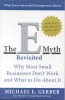
Derek: I've discovered it's what I love most in the world : learning, then applying what I've learned to create something that helps musicians. I've learned a lot in the past few years about systematizing a business so that it's efficient and reliable, able to be run by anyone. If you're interested in this stuff, read a great book called E-Myth Revisited (Michael Gerber).
Me: Ah yes, I'm very familiar with that book already. Other great books to check out are The Long Tail (Chris Anderson) and A Whole New Mind (Daniel Pink).
Derek: Cool! Thanks.
(I've included more information on these books at the end of this interview)
Me: What is it about music as an art form that most inspires you?
Derek
: There's a great quote from a jazz musician that said, "If you can learn music, you can learn anything."
The process of learning music, writing music, recording music, performing music, then marketing my music have each been life-changing experiences for me.
So really, though I love music, I love musicians more. I love helping people with that process. For me, the passion is about the process, not the end result of the music itself. That's why I love helping "just anyone", not passing judgment about who's great and who's not.
Me: On your personal website (www.sivers.org), you offer up the music you've written to be used and recorded and sold, seemingly with no expectation of royalties. Why did you decide to do that?
Derek: It's old and I don't need the money. (laughs). When CD Baby took over my life, I stopped writing and recording. Something in my head switched and I just felt like helping other artists instead of writing more music myself. So that music is like looking at home movies from 10-20 years ago. I'm proud of that kid, but quite distanced from it.
Me: How do you think the music industry will change over the next 10 years? It seems that more and more the artists are becoming responsible for themselves instead of "just being the artist" with a posse to do all the work.
Derek: Exactly. I have a pretty unpopular opinion about this. I was recently at some pompous invite-only music industry event where bigwigs were brought together to discuss the future of the industry. Everyone was talking about how this "$4 billion dollar industry" is going to continue, but the unspoken assumption was that it has to stay at that level or grow. I stood up and said, "What if the entire music industry becomes like the poetry industry? Instead of 1000 people making $1 million, what if the future is a million people making $1000? What if we just need to admit that nobody's going to get rich doing this, and if that bothers you, then you should leave?" Of course that was widely booed and shooed as crazy-talk. But I think that kind of shake-out could be really healthy for the music business. Nobody's in the "poetry business" to get rich.
Me: Maybe if you're making music because it's the only thing your soul will let you do instead of making music because it supports your cocaine habit, that will be a good thing.
Derek: Exactly. Similar story:
I was at a conference speaking on a panel next to Neal Portnow, the head of NARAS, when the subject of piracy came up. He said, "If we don't stop piracy soon, artists will have no motivation to create music anymore!" I said, "I think we'd be better off without those artists that wouldn't create music without financial gain."
Me: Very true. What we have to acknowledge is that changes are happening and there is no stopping it. You can shut down things like Napster but don't assume you've won because in 10 minutes there's going to be the exact same thing hosted somewhere else.
Derek: Ugh. Napster. Yeah. The ultimate centralized P2P distribution system could have so easily been monetized. That was the industry's greatest mistake.
I realize this sounds hypocritical since I'm so driven to help artists make money, but I think that's the tao of business : to succeed, you have to be doing something for love not money, then the money will come.
Me: Maybe what you're doing is helping generate buzz about the artists so people show up for their live shows. live performance is where the indys make their money.
Derek: Well, when I watch CD Baby pay out over $2 million per month directly to the musicians, it's hard to buy into the philosophy that artists don't make money selling music.
Me: Yeah, the artists do but the big businesses don't ... that's the real threat. If you make the major labels irrelevant--or even a hindrance--that changes everything.
Derek: Some artists are better suited to a live-concert career. Some are better suited to selling recorded music. Some make a great living selling music to film and TV. For most, I think the hybrid is where it's at. Finding multiple channels of income puts you on steadier ground, the same way that a table with four legs is steadier than a table with one.
Me: Absolutely true. What needs to happen is the acceptance that the rules and the playing field have changed and will continue changing.
Derek: I met an artist in Hong Kong recently who said that he's been meeting with Warner Music a lot lately, and that they've been surprisingly grassroots entrepreneurial, as if they've already reached rock-bottom and realized their old methods don't work, and are adapting to the changing times instead of becoming irrelevant. That would be interesting!
Me: Yes, the way that the Majors respond to the realization that they're no longer in control will be very interesting to watch. ... What are you working on these days outside of CD Baby?
Derek: I've been a non-stop workaholic since I was 18. In college they called me "the robot" because nobody ever saw me eat, sleep, or even relax. So now I'm 38 and the past few months I've actually been exhaling a bit, reading, learning, relaxing, traveling. I guess this is my current learning experience : learning how to relax a bit.
Me: Excellent. I'd say you deserve a bit of quiet downtime. I look forward to seeing what you'll do next. Thanks for your time today. I'll talk to you soon.
Derek: Ok good. Over & out! Take care.

www.cdbaby.com

Books mentioned in our discussion.

The E-Myth Revisted by Michael E. Gerber walks you through the steps in the life of a business -- from entrepreneurial infancy, through adolescent growing pains, to the mature entrepreneurial perspective -- and works to dispel the myths about starting and growing a new business.
Visit www.e-myth.com or Amazon to learn more.


A Whole New Mind by Daniel Pink is a guide to surviving in the fast-paced, upside-down world we live in today, proposing that the future of global business belongs to the right-brainers.
Visit www.danielpink.com or Amazon to learn more.


The Long Tail by Chris Anderson argues that the future belongs to those that serve the millions of untapped niche markets as well as they serve the masses. Read his manifesto to find out how unlimited shelf space and personalization can revolutionize business.
Vist www.thelongtail.com or Amazon to learn more.


0 Comments


Leave a Reply.

    Email Newsletter icon, E-mail Newsletter icon, Email List icon, E-mail List icon Sign up for Email Updates

    MusePaper is the place where we will discuss our journey in bringing this project to life.
    In addition to that, we will be interviewing some of the creative professionals who have inspired us with their music, films, books, art, plays, fashions, food, and fearless pursuit of audacious living, so please check back often and let us know if there anyone you think we should spotlight and/or meet, including yourself.

    Authors

    Kim Ders

    Shadley Grei is an artist and entrepreneur currently living in Des Moines, IA. For him, life is all about the music, the kindness and the bursts of inappropriate laughter.

    Archives

    August 2008
    July 2008
    June 2008

    Categories

    All
    Art
    Author
    Book
    Derek Sivers
    Eric Himan
    Interview
    Joe Sorren
    Music
    Paul Moschell
    Tiffanie Debartolo

    RSS Feed

Powered by Create your own unique website with customizable templates.
  • HOME
  • In the Beginning
  • Say Hello